|
|
|
Synthesizing energy from power plants
|
|
|
Wageningen University and Research Centre (Netherlands) has developed a technology that allows improving the wetlands (estimated account about 6% of Earth) into renewable useful energy sources. The scientists believe that their new technologies can be using in supplying power to remote areas.
|
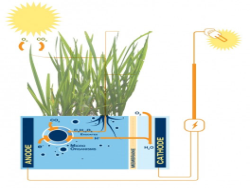
| Unlike biogas (produced by fermentation of biological waste), integrated system called Plant-Microbial Fuel Cell helps generating power without affecting growth or harm habitat trees. Systems take advantage of up 70% organic material produced through process photosynthesis. These are substances that plants do not use and discharge to ground through the roots. These wastes are broken by natural bacteria in the soil and they release waste products as the electronic (electron). By placing an additional electrode near the active bacteria to absorb electrons, the team can generate electricity.
Although Plant-Microbial Fuel Cell technology is only created is 0.4 Watt dien/m2 of land covered with trees, but experts confirm that this way still generates more power than the production biofuels derived by plants (biomass – including husk, wood hips, straw, manures etc.). They also believe in future, this system can be perfect synthesis power with capacity about 3.2 Watt power /m2, meaning a roof area 100m2 covered trees can provide power enough for a family of average electricity consumption 2,800 kWh / year. |
Translator: nnhanh
Follow Thái Thanh Theo Báo Cần Thơ (htthanh) |