As climate change intensifies and extreme weather events become increasingly unpredictable, Vietnam’s meteorological sector is undergoing a critical digital transformation to strengthen forecasting accuracy, disaster preparedness, and public safety. Facing growing exposure to typhoons, floods, droughts, and localized severe weather, the country is rapidly integrating artificial intelligence (AI), Big Data, IoT systems, radar, and satellite technologies into forecasting operations. This shift is not simply a technological upgrade—it represents a strategic evolution in how Vietnam prepares for climate risks and protects lives, infrastructure, and economic stability.
|
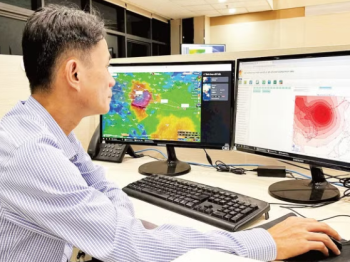
At the forefront of this transition is the National Center for Hydro-Meteorological Forecasting, which has emerged as one of Vietnam’s leading institutions in digital modernization. According to sector leaders, AI is now being used across both technical forecasting and operational workflows, significantly improving speed, precision, and consistency. In urgent disaster scenarios such as storms, tropical depressions, or heavy rainfall events, timing is often the difference between preparedness and catastrophe. AI helps forecasters rapidly standardize technical terminology, detect reporting errors, automate coding tasks, and streamline communication—reducing technical mistakes while enhancing professionalism and reliability.
One of AI’s most transformative contributions lies in scenario analysis. Rather than relying on a single predictive model, forecasters can now compare dozens of scenarios simultaneously using international forecasting systems such as ECMWF’s Integrated Forecasting System (IFS) and the Global Forecast System (GFS). AI evaluates probabilities across these models, identifies likely outcomes, and even compares developing tropical systems with historical analogues. This allows meteorologists to make faster, more informed decisions, particularly in early warning contexts such as nowcasting for short-term severe weather.
The integration of IoT has further strengthened Vietnam’s observational capacity. Thousands of automated rainfall gauges, soil moisture sensors, hydrological stations, and water-level monitoring devices now continuously transmit real-time field data. When combined with radar imaging and satellite visualization, forecasters gain a layered, highly detailed understanding of evolving weather systems. Radar acts as dynamic “vision,” tracking storm structures and convective cloud movements, while IoT sensors provide precise ground-truth data. Together, these tools create faster, sharper, and more localized warnings.
For hydrological forecasting, digital transformation is equally significant. Advanced computing systems can process enormous volumes of river, rainfall, and climate data in minutes rather than hours, improving flood predictions and reducing human error. This is especially important in a country where flash floods and river surges can escalate rapidly.
Despite these advances, experts emphasize that AI remains a “virtual assistant,” not a replacement for human forecasters. Experience, contextual judgment, and crisis interpretation remain essential, particularly during unprecedented weather events where algorithms alone may be insufficient.
Vietnam’s meteorological digitalization also carries international significance. Through stronger data-sharing systems and integration with the World Meteorological Organization (WMO), Vietnam is contributing to regional forecasting networks while benefiting from broader scientific collaboration.
Ultimately, digital transformation in meteorology is about more than modernization—it is about resilience. By combining cutting-edge technology with human expertise, Vietnam is building a forecasting system capable of responding more effectively to the realities of climate disruption.
In an era where weather extremes are becoming more dangerous and complex, the future of forecasting depends not only on observing the sky, but on mastering the data behind it. Vietnam’s investment in digital meteorology is therefore an investment in national safety, sustainable development, and climate security. |