» Today: 04/05/2026
Environment
Amid the peak heat of April’s dry season, hundreds of households in Lam Son Commune, Khanh Hoa Province, are confronting a growing humanitarian and infrastructure crisis: the daily struggle for basic access to clean water. What was once considered a localized rural hardship has now become an urgent public welfare issue affecting entire communities, particularly in the villages of Tam Ngan 1, Tam Ngan 2, and Gon 1. For many families—most of them from Raglai and K’Ho ethnic communities—water scarcity is no longer just an inconvenience; it is a constant burden shaping health, livelihoods, sanitation, and quality of life.
Vietnam is entering a potentially critical climate transition period as the Ministry of Agriculture and Environment has issued an early warning about significant water shortage risks linked to the likely return of El Niño beginning in mid-2026. Based on climate monitoring data and forecasting models, the ENSO system is expected to shift from La Niña to neutral conditions before moving into El Niño between June and August 2026, with an estimated probability of 80–90 percent. If this transition intensifies as projected, Vietnam could face widespread drought, reduced rainfall, higher temperatures, salinity intrusion, and increasing pressure on water security from late 2026 through 2027.
After enduring one of the most destructive years of natural disasters in recent history, Vietnam is moving decisively to strengthen disaster preparedness in 2026 through a strategic shift toward earlier action, stronger coordination, and long-term resilience planning. Following the severe storms, floods, and climate-related disasters of 2025—which caused extraordinary human and economic losses—government agencies, international organizations, and disaster risk reduction partners are now emphasizing that future success will depend not only on response capacity, but on acting before disasters escalate. The 2026 national disaster risk agenda reflects a growing recognition that in an era of intensifying climate threats, prevention and preparedness are as critical as emergency recovery.
Vietnam is taking a significant strategic step toward its Net Zero ambitions by launching a new international cooperation initiative designed to strengthen climate technology investment, accelerate green innovation, and expand market readiness for startups and small businesses. On April 17 in Hanoi, Vietnam’s Ministry of Finance, together with the Korea International Cooperation Agency (KOICA) and the Global Green Growth Institute (GGGI), officially launched a major project aimed at enhancing Vietnam’s readiness for net-zero emissions through expanded access to climate technology financing for small and medium-sized enterprises (SMEs) and startups. This initiative signals an important evolution in Vietnam’s climate strategy—from policy commitment alone toward practical ecosystem-building that connects innovation, finance, and implementation.
After suffering unprecedented flood and disaster losses in recent years, Cao Bang Province is rethinking the very foundation of how mountain urban areas are planned, built, and protected in the age of climate change. Faced with increasingly severe floods, flash rains, and unpredictable hydrological extremes, the province is shifting from traditional disaster response toward a broader strategy of climate-adaptive urban transformation—one that prioritizes safety, resilience, and long-term sustainability. This transition reflects a critical national lesson: in vulnerable mountainous regions, urban development can no longer focus only on expansion; it must be fundamentally redesigned around climate risk.
As prolonged heatwaves intensify across the Mekong Delta, Can Tho City is facing a growing pattern of preventable fires caused not by natural disasters, but by unsafe human behavior—particularly the burning of household waste, dry grass, and post-harvest rice straw. Local authorities are now urgently warning residents that seasonal carelessness is creating serious fire hazards for homes, farmland, public safety, and transportation systems. In a period of extreme dryness, even a seemingly minor open flame can escalate rapidly into a major emergency.
Quang Ngai Province has officially announced three designated marine disposal zones for offshore dredged material dumping, marking a major step in formalizing how sediment from navigation, port, and coastal infrastructure projects will be managed. While the move is intended to support economic development, maritime operations, and dredging efficiency, it also places significant responsibility on authorities and project operators to ensure that marine ecosystems, fisheries, and coastal environmental stability are not compromised. The decision highlights the increasingly delicate balance between infrastructure modernization and ocean governance in Vietnam’s coastal provinces.
Lao Cai Province has officially begun construction of the EcoSapa O Quy Ho Tea Hill Ecological Urban Area, a major 2.4 trillion VND development that signals Sa Pa’s continued transformation into a high-value mountain tourism and integrated urban destination. Located in Sa Pa Ward and spanning approximately 29.3 hectares, the project represents far more than a real estate investment—it reflects a broader strategic effort to redefine highland urbanization through ecological branding, tourism infrastructure, and long-term economic diversification.
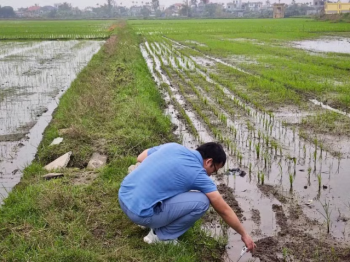
As climate change intensifies sea-level rise, erratic hydrological cycles, and saltwater intrusion across Vietnam’s coastal zones, the Red River Delta is emerging as a new frontline in the battle for agricultural resilience. Traditionally, salinity intrusion has been more strongly associated with the Mekong Delta, but growing environmental instability now increasingly threatens northern coastal farming systems as well. In response, a groundbreaking partnership between the VinFuture Foundation and the University of Science under Vietnam National University, Hanoi is launching an advanced multi-technology project designed to create a “digital shield” against salinity intrusion—an ambitious fusion of artificial intelligence, physical modeling, IoT, remote sensing, and geospatial systems aimed at protecting green agriculture and strengthening climate adaptation.
As climate change, ocean acidification, biodiversity decline, and marine pollution increasingly reshape coastal systems worldwide, Vietnam and France are deepening scientific cooperation through one of the most ambitious bilateral marine research efforts in recent years. The Plume program—an international collaboration between the Vietnam Academy of Science and Technology and France’s Institute of Research for Development (IRD)—is emerging as a major milestone in oceanographic science, environmental monitoring, and strategic knowledge-building for the future of Vietnam’s coastal resilience. More than a scientific expedition, Plume represents a powerful model of how international research partnerships can generate practical solutions to some of the planet’s most urgent ecological challenges.
Previous 1 [2] 3 4 5 6 7 8 9 10 Next
Top
© Copyright 2010, Information and Documentation Center under Can Tho Science and Technology Department
Address: 118/3 Tran Phu street, Cai Khe ward, Ninh Kieu district, Can Tho city Tel: 0710 3824031 - Fax: 0710 3812352 Email: tttlcantho@cantho.gov.vn License No. 200/GP-TTÐT dated November 11st, 2011 by Agency for Radio, Television and Electronic Information under Minister of Information and Communication