Agriculture - Forestry - Fishery
|
|
Genes controlling seed size
|
|
|
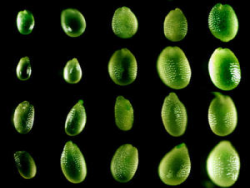
Seed size is controlled by small RNA molecules that are inherited from parent trees. Research by scientists at the University of Texas has great significance for agriculture and an understanding of plant evolution.
|
According to Z. Jeff Chen, a professor of molecular genetics at the University of Texas plants, seed plants provide nearly 70-80% and 60-70% protein energy for plant growth. Seed production is very important for agriculture and the evolution of plants.
Chen and colleagues gave the first evidence to prove the development of seeds is controlled by a small RNA is inherited from the mother plant siRNAs. The study of seed size control was published in the journal PNAS.
SiRNA control some growth factors and development in plants and animals. Researchers have used Arabidopsis, a flowering plant of rapid development in research.
In the experiment, the researchers found that siRNA affects the development of the seed endosperm, the nutrient supply for plant embryo development.
In the seeds of flowering plants, the embryo is formed from the merger of the plant genome father and mother plant, whiles the endosperm genome is combining a one genome of father and two genomes of mother. The process of formation of the embryo and endosperm is called double fertilization process.
Scientists have discovered that when the flowers have a tetraploid genome associated with male flowers diploid genome, occurs as it is increasing the plant's genome not only in the endosperm of the seed but also in SiRNAs from the mother plant.
The siRNA decreased the expression of this gene leads to greater endosperm growth, ie siRNA create smaller seeds.
Scientists are finding out exactly how siRNA controlling gene expression in endosperm, embryo and seed size is. These studies will help develop the tools of biotechnology to improve crop varieties and products.
However, Chen also warned that bigger is not always better. In fact, in his experiments, the seeds lack the control of siRNA was inherited from the mother plant grow was easy enough to fall over. |
http://www.vista.vn (Translator: nnhanh)
Follow http://www.vista.vn |