» Today: 05/05/2026
Nature
Vietnam has made remarkable national progress in reducing bear farming over the past two decades, cutting the number of captive bears by more than 95 percent since 2005 and helping 22 provinces and cities eliminate bear captivity entirely. Yet one major obstacle remains: Hanoi, particularly Phuc Tho, continues to hold the country’s largest concentration of captive bears, making it the single most important battleground in Vietnam’s push toward a “zero captive bears” future. Current trends show that while progress is real, the pace is still too slow—and the fact that more bears are dying in captivity than being voluntarily transferred to rescue centers underscores the urgency for stronger intervention.
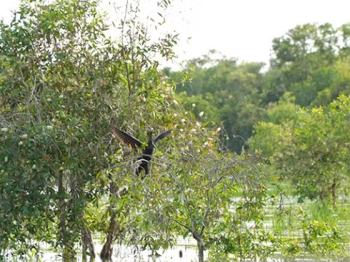
Tram Chim National Park in Dong Thap is showing powerful signs of ecological renewal, offering one of Vietnam’s most encouraging conservation stories in the face of biodiversity decline, climate pressure, and wetland degradation. Once heavily challenged by habitat disruption, inappropriate hydrological control, wildfire risk, and ecosystem imbalance, this globally recognized Ramsar wetland is now demonstrating that science-based restoration, adaptive water governance, and local community participation can meaningfully reverse environmental decline. The return of rare bird species, the recovery of native vegetation, and the reappearance of aquatic biodiversity all signal that Tram Chim’s ecosystem is moving steadily toward revitalization.
A serious large-scale landslide along the East Phu An Canal route in Binh Phu Commune, Dong Thap Province, has exposed the growing vulnerability of Mekong Delta infrastructure to erosion, hydrological instability, and climate-related land degradation. The collapse not only severed a critical transportation artery, but also placed homes, flood protection systems, and hundreds of hectares of high-value agriculture at immediate risk. Beyond its local impact, this disaster underscores a larger regional challenge: in low-lying delta systems, landslides are increasingly becoming both an infrastructure crisis and an agricultural security threat.
A mysterious lizard living in the harsh deserts of Australia has just been confirmed as a new species, with a population estimated at fewer than 20 individuals. The finding not only stuns the scientific community but also highlights the crucial role of Indigenous knowledge in conservation.
A groundbreaking study has overturned long-held scientific assumptions: even without a brain or nervous system, the single-celled organism Stentor coeruleus demonstrates the ability to learn through associative processes.
A chance discovery by a shepherd in Argentina’s Patagonia has rewritten the history of prehistoric life. What began with a massive femur fossil over two meters long led to the excavation of one of the largest dinosaurs ever identified: Patagotitan mayorum.
Fossils unearthed in Uruguay have revealed Josephoartigasia monesi, the largest rodent ever to walk the Earth. Living millions of years ago, this giant weighed nearly half a ton and wielded a bite force powerful enough to shatter bone.
Archaeologists in China have uncovered a remarkable burial site from the Western Zhou dynasty (1046–771 BCE), where bronze weapons were deliberately broken before being placed in tombs. Far from being signs of destruction, these fractured blades carry profound symbolic meaning.
Water is the foundation of all life. If vast portions of the oceans vanished and were replaced by land, Earth’s climate system would collapse, forcing humanity and countless species into a brutal struggle for survival.
Hidden deep within Europe’s underground caves lives a strange amphibian that looks strikingly similar to the dragons of legend. Known as the olm (Proteus anguinus), this blind cave-dweller possesses extraordinary survival abilities unmatched in the animal kingdom.
Previous 1 [2] 3 4 5 6 7 8 9 10 Next
Top
© Copyright 2010, Information and Documentation Center under Can Tho Science and Technology Department
Address: 118/3 Tran Phu street, Cai Khe ward, Ninh Kieu district, Can Tho city Tel: 0710 3824031 - Fax: 0710 3812352 Email: tttlcantho@cantho.gov.vn License No. 200/GP-TTÐT dated November 11st, 2011 by Agency for Radio, Television and Electronic Information under Minister of Information and Communication